Finding Your True Capacity
(Without over- or under-shooting it)

There’s a question I’ve been quietly orbiting for the last few months:
What’s the highest level of output I can sustain—without burning out before the finish line, and without arriving at the finish line with energy left unused?
I didn’t fully understand this until I raced my first Ironman relay in 2024.
I had a plan.
I was chasing some loose metrics
But I had restraint—because it was my first big race on an unknown course.
I realized later, after crossing the finish line, I may have been a little too conservative.
Not drastically, but enough that I finished with more left in the tank than I needed. Enough that, in hindsight, I could’ve gone a little harder—if I had been more willing to check in, adjust, and respond honestly in the moment.
That experience stuck with me, because I think the goal in endurance racing isn’t just to survive the distance. (And it’s certainly not to empty the tank as fast as possible either.)
It’s to find something far more precise:
Alignment.
Not maximum effort nor restraint for the sake of preservation. But a kind of calibrated honesty between known effort and unknown capacity.
The best coaches and teachers build entire strategies around this idea.
They’re chasing a moving target:
-the exact pace at which your output matches your ability
-where nothing is wasted
-where you’re right at the edge of effort, but not forcing it
A system that is efficient, powerful, and sustainable.
A sweet spot.
Not easy—but manageable, for a while.
So, I’ve found myself coming back to this question all the time now—what is the right output here?
A Mistake Many People Make
Maybe you assume growth looks like:
more discipline
more intensity
more optimization
more output
In other words: becoming more than human.
And this is where things subtly start to erode, because the system can’t always tolerate more—faster, harder, better.
As my teacher, Sadhguru, eloquently describes it:
“The spiritual journey isn’t about becoming superhuman.
It’s about realizing that being human—fully—is already super.”
I’ve come back to this idea for years—but I’m only now fully understanding how practical it is. This applies across almost every domain:
training/exercise
nutrition
recovery/work
stress
creativity
relationships/community
The goal of growth isn’t to fully override your system or to keep adding more in pursuit of perfection. (As my mom would have described it, it’s knowing when there’s nothing left to take away.) It’s about understanding yourself well enough to work with your limits and to slowly expand them.
Capacity Isn’t Fixed—It’s Built
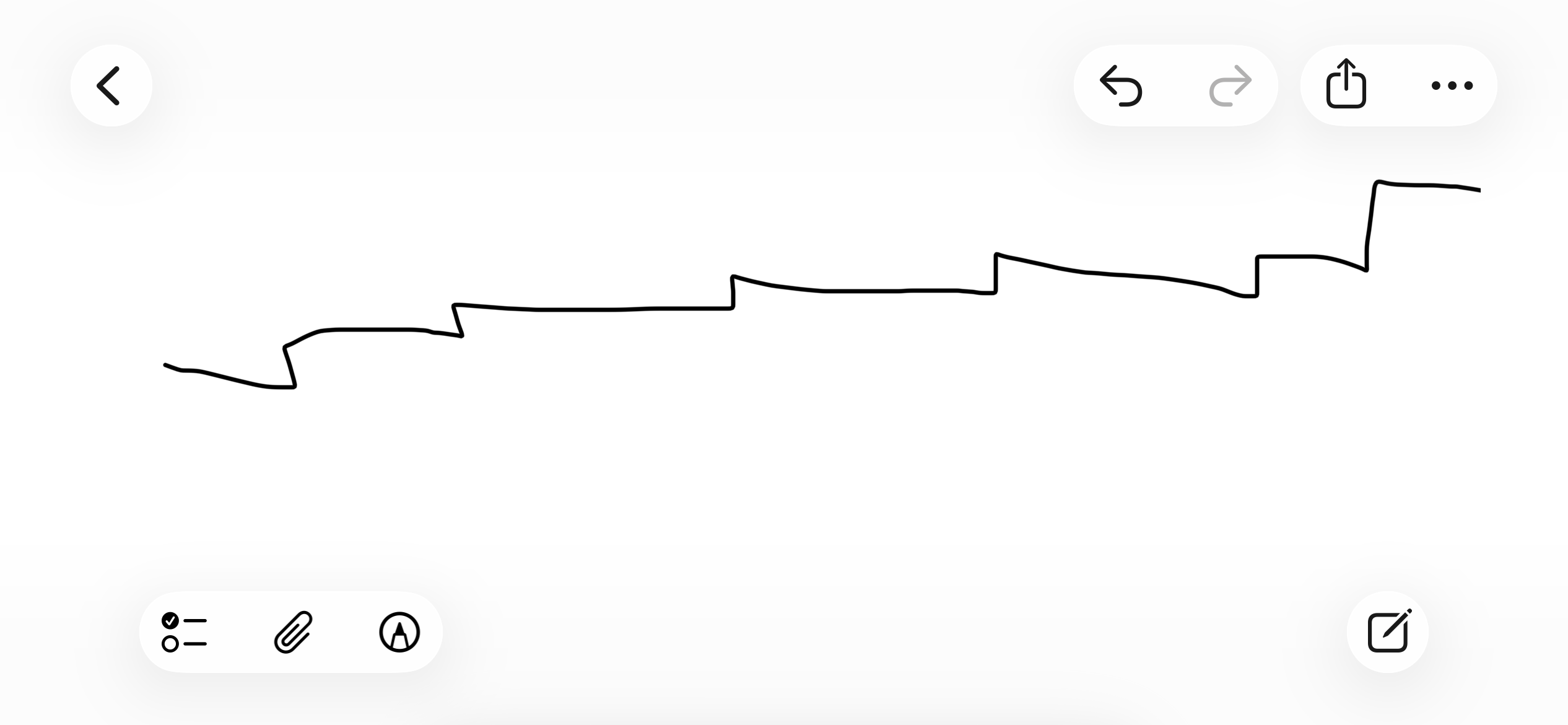
The word “to build” literally comes from the root *bʰuH- (to become). It’s a process.
Your capacity isn’t a fixed trait. (Neither is your personality, preferences, or fate, by the way, those too can change!)
It evolves based on feedback, which takes time and integration. And feedback requires reflection and measurement.
I wager that most people don’t exceed their limits because their goals are too lofty or wild. They exceed them because they’re misreading signals:
Fatigue gets ignored until it becomes an injury
Hunger cues get overridden until energy crashes
Stress gets normalized until exhaustion feels normal
Or the opposite:
Discomfort is mistaken for danger, so edges are never explored.
Effort feels like overexertion, so intensity is never varied.
If growth edges are avoided entirely, we can oscillate between pushing too far or not far enough. Staying comfortable or familiar. We rarely land in the place where adaptation actually happens, which is the sweet spot of alignment.
The Missing Piece: Turning States into Traits
One of the biggest gaps I see in personal development is this:
Just because you experience something… doesn’t mean it changes you.
As Dr. Rick Hanson, author of NeuroDharma, says:
“States don’t automatically become traits.”
You can feel strong, calm, focused, or capable—and lose it minutes later.
The brain is wired with a negativity bias. It holds onto stress responses more easily and frequently than positive experiences.
So if you actually want to build capacity, you have to do something counterintuitive:
Slow Down.
Stay with the moment when things feel good, strong, or aligned.
Let it register. Let yourself feel it—so you can keep it.
Dr. Hanson teaches:
have the experience
enrich it (be curious, be present)
absorb it (stop to reflect)
reinforce it (do it again!)
That’s how resilience, patience, and strength become yours.
My Method for Increasing Capacity
Integrate → Apply → Adapt → Build → Experiment
Integrate → What is your body actually telling you?
Apply → Make a decision based on that signal
Adapt → Adjust in real time, not after collapse
Build → Expand your baseline through consistency
Experiment → Stay curious, not rigid
Lived experimentation is the only way we can actually find our actual edges and our abilities. We can force or fake it (at least, not repeatedly).
But by paying attention—and staying present with our efforts, we can find alignment and build/become from there.
The Sweet Spot
This shows up everywhere in life:
Training
→ Getting enough stimulus to elicit physiological changes/adaptations
→ But not so much that you can’t recover from them
Nutrition
→ Should be structured enough to support performance/goals
→ Yet flexible enough to sustain with little effort
Work
→ Focused effort without chronic depletion
Relationships
→ Showing up fully, without overextending yourself
An Invitation to Practice:
I’m not searching for ways to do more, work harder, or “maxx” everything. Instead, I’m discerning how I can expand my capacity to meet the demands and desires of my life—without fighting myself so hard in the process of becoming.
I’m asking myself, and I invite you to do the same:
What is the highest level of output I can sustain today—without disconnecting from myself?
Then reflect:
When have I overshoot?
Did I hold back?
Or did I land right in it?
I accept that my tendency is towards perfection. And I’m helping myself experiment and improve via small daily calibrations.
Becoming “fully human” isn’t about unlocking some elite, superhuman version of yourself. It’s about:
listening more precisely
responding more intelligently
and building a system that actually supports you
I know when I’m pushing up a tough hill, focusing on a creative project, or showing up for my loved ones in heart, mind, and body, when my effort matches my capacity, I never stall. I get to move through life experience feeling fully superhuman.
Steady. Powerful. And Limitless.
-Britta